- Head Office No, 7 Ground Floor Executive Complex back side PSO Pump, G-8 Markaz Islamabad.
- 0300-7882573
- 051-8899990

Auditory Steady-State Response (ASSR) is an advanced, objective, and non-invasive hearing assessment used to evaluate how the auditory system responds to continuous, repeated, or rapidly presented sound stimuli. It measures the electrical activity generated by the hearing pathway, including the inner ear (cochlea), auditory nerve, and central auditory system, providing important information about a person’s hearing sensitivity.
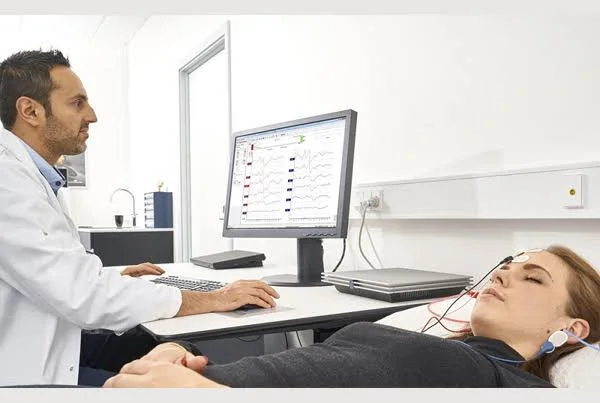
Unlike conventional behavioral hearing tests, where patients must actively respond by indicating when they hear a sound, ASSR does not require conscious participation. Instead, it uses sensitive electrodes placed on the scalp to detect and record the brain’s electrical responses to sound stimulation. This makes ASSR particularly useful for newborns, infants, young children, individuals with developmental difficulties, and patients who are unable to provide reliable behavioral responses.
During an ASSR test, sounds such as modulated tones are delivered through earphones or insert earphones at different frequencies and intensity levels. The electrodes detect the synchronized electrical responses produced by the auditory system, and specialized computer software analyzes these responses to estimate the individual’s hearing thresholds. The test provides detailed frequency-specific information, helping audiologists understand how well a person hears different pitches.
During an ASSR test, specially calibrated sounds are presented through earphones or insert earphones. Small electrodes are placed on the head to detect the brain’s electrical responses to these sounds. The recorded responses are analyzed using specialized equipment to estimate hearing thresholds at different frequencies.
Because ASSR is an objective test, it can be particularly helpful for infants, young children, individuals with developmental difficulties, or patients who are unable to provide consistent responses during conventional audiometry.